



































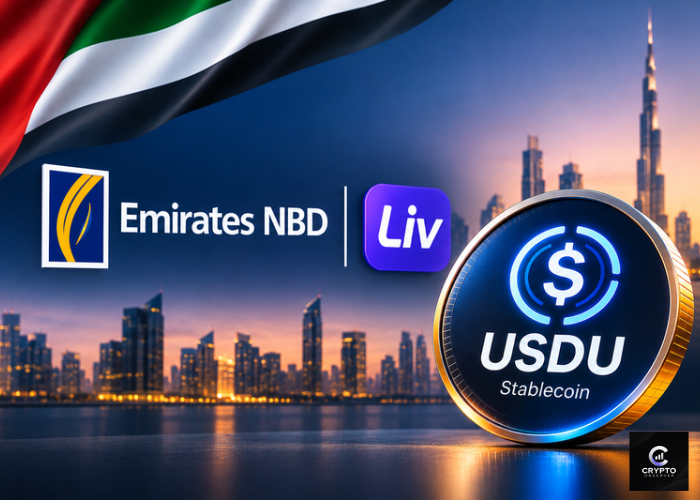
Emirates NBD’s digital banking platform Liv is expanding its digital asset services through an integration with USDU, a US dollar-backed stablecoin issued by Universal Digital. The November 9 announcement involves a partnership with digital asset infrastructure provider Aquanow, bringing regulated stablecoin infrastructure into Liv’s banking ecosystem. The development highlights the UAE’s growing efforts to connect traditional banking services with blockchain-based financial infrastructure as stablecoins gain traction beyond cryptocurrency exchanges.
The partnership brings together three companies operating at different levels of the digital asset ecosystem. Liv provides the banking interface, Universal Digital issues the stablecoin, and Aquanow supplies the infrastructure supporting its distribution and liquidity.
Liv Partners With Universal Digital and Aquanow to Introduce USDU
The partnership involves the integration of USDU into Liv’s digital banking ecosystem, expanding the platform’s digital asset offering.
Universal Digital International Ltd. is the issuer of USDU, while Aquanow provides digital asset infrastructure and distribution capabilities. Emirates NBD’s Liv serves as the customer-facing banking platform through which the integration is being introduced.
The arrangement reflects a broader shift in how financial institutions approach digital assets. Rather than requiring customers to navigate separate cryptocurrency platforms, banks and digital banking providers are increasingly exploring ways to incorporate blockchain-based financial products into existing customer experiences.
For Liv, the integration adds another dimension to its digital asset strategy, which already includes cryptocurrency-related services through Liv X.
The partnership also connects a UAE banking platform with a stablecoin issuer operating within the country’s regulated digital asset environment.
What Is USDU and How Is Stablecoin Backed?
USDU is a US dollar-backed stablecoin issued by Universal Digital International Ltd. The token is designed to maintain a one-to-one value relationship with the US dollar, with reserves supporting its issuance.
According to the issuer, the stablecoin is backed by US dollar reserves held with UAE banks and supported by monthly reserve attestations.
USDU is registered with the Central Bank of the UAE under its Payment Token Services Regulation, providing a regulatory framework for its permitted activities.
Unlike conventional cryptocurrencies such as Bitcoin and Ethereum, stablecoins are designed to maintain relatively stable values by referencing currencies or other assets.
Dollar-backed stablecoins are increasingly used for digital asset trading, transfers, liquidity management and blockchain-based financial transactions.
Their role is also expanding beyond cryptocurrency markets, as stablecoins become part of the broader digital financial infrastructure.
However, regulatory registration does not make USDU equivalent to a bank deposit or guarantee that every banking customer can access it without restrictions. Its permitted uses and customer eligibility remain subject to applicable regulatory requirements.
UAE’s Stablecoin Regulations Become Central to Banking Integration
The partnership comes as the UAE continues developing a regulatory framework for stablecoins and other digital payment instruments.
The Central Bank of the UAE introduced its Payment Token Services Regulation to establish requirements for payment tokens, including licensing, reserve arrangements and permitted activities.
The framework distinguishes between payment tokens and other digital assets, placing specific requirements on businesses involved in issuing and facilitating regulated payment token services.
USDU’s registration within this framework is an important part of the partnership because it connects the stablecoin with the UAE’s regulated financial environment.
The country has also developed separate regulatory structures for virtual asset activities through authorities including Dubai’s Virtual Assets Regulatory Authority (VARA).
These frameworks serve different regulatory purposes. CBUAE payment token registration should not be confused with VARA authorization, and the involvement of a regulated infrastructure provider does not automatically mean every product or service in the partnership falls under the same authorization.
For financial institutions exploring stablecoin integrations, regulatory clarity is becoming an important consideration alongside liquidity, custody, reserve transparency and operational infrastructure.
Aquanow Provides the Digital Asset Infrastructure
Aquanow plays an infrastructure role in the partnership, connecting the stablecoin issuer with Liv’s digital banking ecosystem.
The company provides institutional digital asset infrastructure, including liquidity and distribution services for financial institutions and businesses entering digital asset markets.
Its involvement is significant because stablecoin integrations require more than simply making a token available through a banking application. Financial institutions need reliable institutional crypto infrastructure to support digital asset distribution, liquidity management and transactions while meeting applicable compliance requirements.
Financial institutions need supporting infrastructure to facilitate digital asset distribution, liquidity management and transactions while meeting applicable compliance requirements.
Aquanow’s existing relationship with Liv through its cryptocurrency services also provides a foundation for expanding their collaboration into stablecoins.
The partnership demonstrates how infrastructure providers are becoming important intermediaries between traditional financial institutions and blockchain-based asset issuers.
Liv’s Digital Asset Strategy Extends Beyond Cryptocurrency Trading
The USDU integration builds on Liv’s existing digital asset offering.
Through Liv X, the platform introduced cryptocurrency-related services that allow eligible customers to access digital assets through its digital banking environment.
The stablecoin integration extends this strategy beyond conventional cryptocurrency exposure.
Bitcoin and Ethereum are primarily traded as investment assets, with prices determined by market demand and supply. Stablecoins serve a different purpose by maintaining a reference value against a traditional currency, making them useful for transfers, liquidity and other digital financial activities.
Bringing stablecoin infrastructure into a digital banking ecosystem could help connect conventional banking services with blockchain-based financial applications.
Alongside the integration, Liv also announced a 90-day zero-fee cryptocurrency trading promotion aimed at attracting new and existing customers to its digital asset services.
The promotional campaign forms part of the platform’s broader efforts to expand customer participation in digital assets.
What the Partnership Means for Stablecoin Adoption in the UAE
The integration reflects a broader development across the financial industry: stablecoins are increasingly being considered as components of regulated financial infrastructure rather than instruments used exclusively within cryptocurrency markets.
Banks, payment companies and financial technology providers are exploring how dollar-backed tokens can support digital transfers, liquidity and blockchain-based settlement systems.
For the UAE, the involvement of Emirates NBD’s digital banking ecosystem adds another example of traditional financial institutions engaging with regulated stablecoin infrastructure.
The partnership also highlights the importance of having multiple participants in the stablecoin ecosystem.
Issuers are responsible for creating and managing the tokens and their reserve arrangements. Infrastructure providers support distribution and liquidity, while banking platforms provide customer access and financial service integration.
The long-term significance of the Liv integration will depend on customer adoption, regulatory permissions, transaction capabilities and how extensively USDU is incorporated into the platform’s services.
For now, the partnership represents another step in the UAE’s expanding digital asset ecosystem, bringing a regulated dollar-backed stablecoin closer to the mainstream digital banking environment.