






































Is Hyperliquid a good investment in 2027? The question is attracting attention as the decentralized exchange expands its presence in the cryptocurrency derivatives market. Unlike projects driven primarily by token speculation, Hyperliquid has developed an onchain trading ecosystem that generates fees through perpetual futures and spot markets. Its growing trading activity, expanding financial products and native HYPE token economics make it an important project to evaluate ahead of 2027.
Hyperliquid’s financial performance provides a starting point for this assessment. According to Bitwise’s Q3 2026 report, the protocol generated $228.1 million in fees and reserve income, with $730.1 billion in trading volume and average open interest of $12.7 billion. Its Assistance Fund also uses eligible protocol fees to purchase HYPE tokens from the open market, connecting platform activity with the token’s supply and demand dynamics.
However, strong trading performance does not automatically make HYPE a profitable investment. Token unlocks, market valuation, competition, regulatory uncertainty and the sustainability of protocol revenue could influence its long-term prospects. This analysis examines Hyperliquid’s revenue model, HYPE tokenomics, growth opportunities and investment risks to assess whether the project has the fundamentals to remain competitive in 2027.
What Is Hyperliquid (HYPE)?
Hyperliquid is a decentralized trading platform and Layer 1 blockchain designed to support high-performance onchain financial markets. Its ecosystem focuses on perpetual futures, spot trading and additional financial applications built around its trading infrastructure.
The platform aims to provide an exchange-like trading experience while keeping order execution and market activity onchain. Rather than relying entirely on traditional centralized exchange infrastructure, Hyperliquid operates its own blockchain environment to support trading, settlement and ecosystem development.
Its native token, HYPE, plays a role in the network’s staking and governance mechanisms and is central to its fee-funded Assistance Fund mechanism.
How Does Hyperliquid Work?
Its ecosystem has several important components:
- HyperCore: The core trading infrastructure responsible for supporting spot and perpetual futures markets.
- HyperEVM: An Ethereum-compatible execution environment that enables developers to build decentralized applications and smart contracts within the Hyperliquid ecosystem.
- Perpetual futures: Derivatives markets that allow traders to gain leveraged exposure to assets without owning the underlying assets directly.
- Spot markets: Markets where users can trade supported digital assets.
- HYPE token: The native asset used in staking, governance-related functions and the protocol’s token economics.
This infrastructure gives Hyperliquid an opportunity to compete in the decentralized derivatives market while expanding into other areas of onchain finance.
Why Has Hyperliquid Attracted Attention?
One of the main reasons behind Hyperliquid’s growth is its focus on trading performance and market liquidity. Derivatives traders generally require efficient execution, sufficient liquidity and competitive trading costs. Hyperliquid’s onchain order book is designed to address these requirements within a decentralized environment.
Its expansion into markets beyond cryptocurrencies has also broadened its potential audience. Through HIP-3, developers can deploy permissionless perpetual markets covering assets such as equities, commodities and indices, subject to the protocol’s requirements.
This expansion is important because Hyperliquid’s long-term opportunity may depend on whether it can become a broader onchain financial marketplace rather than remaining primarily a cryptocurrency derivatives exchange.
How Does Hyperliquid Generate Revenue?
Understanding the Hyperliquid revenue model is important when evaluating the long-term investment potential of HYPE. Unlike blockchain projects that depend primarily on token issuance or ecosystem incentives, Hyperliquid generates revenue through trading activity and other financial services operating within its ecosystem.
Its primary revenue source is perpetual futures trading, although the platform has gradually expanded its revenue base through additional markets and infrastructure.
Perpetual Futures Trading Fees
Perpetual futures are derivative contracts that allow traders to speculate on the price movements of assets without holding the underlying cryptocurrency. Traders can open long or short positions and use leverage to increase their market exposure.
Hyperliquid charges trading fees when users execute transactions through its perpetual futures markets. As trading activity increases, the platform has an opportunity to generate more fees.
This model connects revenue generation to several factors:
- Number of active traders using the platform.
- Total perpetual futures trading volume.
- Trading fee structure and applicable discounts.
- Market liquidity and order execution.
- Demand for leveraged trading products.
However, higher trading volume does not automatically translate into proportionally higher revenue. Fee rates, market incentives and revenue-sharing arrangements can affect how much the protocol actually retains.
Spot Trading and Additional Revenue Sources
Hyperliquid also supports spot trading, allowing users to exchange supported assets directly.
Beyond spot and perpetual futures trading, the ecosystem has expanded through HyperEVM activity, market auctions, priority fees and reserve income.
Its newer products also create additional opportunities:
- HIP-3 expands the range of perpetual futures markets available on the platform.
- HIP-4 introduces outcome-based markets.
- Native lending enables users to borrow through HyperCore.
- AQAv2 creates a revenue stream associated with USDC reserves.
These developments matter because relying heavily on a single revenue source can expose a protocol to changes in market conditions. Diversification may help Hyperliquid develop a more sustainable business model.
Nevertheless, investors should examine the actual revenue contribution of each product rather than assuming every new feature will become a significant source of income.
Hyperliquid Revenue and Financial Performance
Revenue performance is one of the most important factors when evaluating whether Hyperliquid can sustain its position in the decentralized finance market.
According to Bitwise’s Q4 2026 staking report, which includes Q3 2026 operating data, Hyperliquid generated $228.1 million in fees and reserve income during the third quarter. This represented a 24.8% increase compared with Q2 2026.
The report also highlighted increased trading volume and average open interest, suggesting that the platform maintained substantial market activity during the quarter.
Hyperliquid Q2 vs Q3 2026 Performance
| Metric | Q2 2026 | Q3 2026 |
|---|---|---|
| Fees and reserve income | $182.8M | $228.1M |
| Total trading volume | $668.7B | $730.1B |
| Perpetuals volume | $652.5B | $716B |
| Average open interest | $8.7B | $12.7B |
| Non-crypto perpetuals volume | $212.1B | $261.5B |
Revenue growth: Fees and reserve income increased from $182.8 million to $228.1 million. This indicates that Hyperliquid generated stronger reported economic activity during Q3.
Higher trading volume: Total trading volume increased to $730.1 billion. Greater trading activity can support fee generation, although actual revenue depends on applicable fee rates and revenue distribution.
Growing open interest: Average open interest increased to $12.7 billion. Open interest represents the total value of outstanding derivatives positions that have not been closed or settled.
The distinction between trading volume and open interest is important. Trading volume measures transactions executed over a period, while open interest measures outstanding positions at a given time. Both provide different insights into market activity.
What Does Revenue Growth Mean for HYPE?
Revenue growth is relevant because Hyperliquid directs eligible protocol fees towards its Assistance Fund, which purchases HYPE from the open market.
If trading activity remains strong, the mechanism can create recurring buying demand for HYPE.
However, investors should not treat protocol fees as equivalent to profit distributed directly to tokenholders. HYPE does not represent conventional company equity, and the buyback mechanism does not guarantee a particular return.
Another important consideration is the difference between reported revenue and fees generated by specific markets. For example, Bitwise includes reserve income in its $228.1 million figure. Different research providers may use different accounting methodologies.
For investment analysis, comparing figures requires checking what each source actually includes.
Understanding HYPE Tokenomics
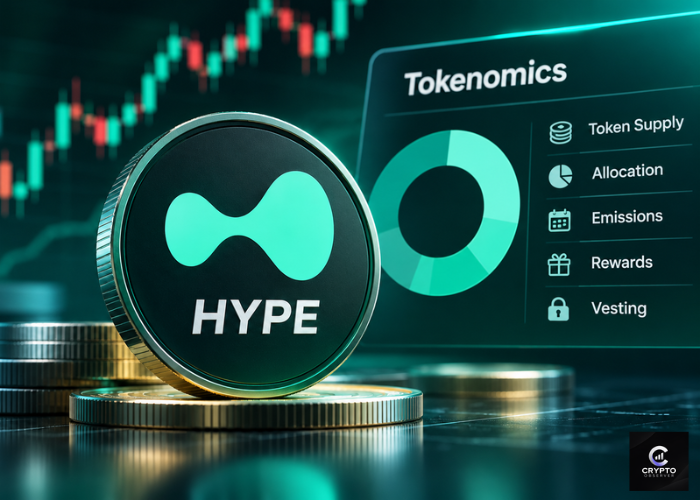
Tokenomics plays an important role in determining how supply, demand and network participation can influence a cryptocurrency’s market value.
HYPE has a maximum supply structure, a substantial community allocation and a protocol-funded purchasing mechanism.
Understanding these components is essential when assessing the long-term Hyperliquid investment outlook.
HYPE Token Supply and Distribution
Its initial allocation included the following categories:
| Allocation | Initial Supply |
|---|---|
| Genesis distribution | 31% |
| Future emissions and community rewards | 38.89% |
| Core contributors | 23.8% |
| Hyper Foundation | 6% |
| Community grants | 0.3% |
| HIP-2 allocation | 0.01% |
The genesis distribution allocated a significant portion of the initial supply to early network users. This helped distribute tokens beyond the founding team and contributors.
However, the future emissions and core contributor allocations remain important considerations.
Approximately 238 million HYPE tokens were reported as allocated to core contributors under a multi-year vesting schedule beginning in November 2025. These releases can increase the available supply over time, depending on the applicable vesting and distribution arrangements.
For investors, the important question is whether demand can grow sufficiently to absorb additional tokens entering circulation.
Assistance Fund and HYPE Token Buybacks
One of the most distinctive features of HYPE tokenomics is the Assistance Fund.
The mechanism uses eligible protocol fee revenue to purchase HYPE tokens from the open market. Unlike a traditional company that distributes profits through dividends, Hyperliquid’s mechanism creates token demand through recurring purchases.
According to Hyperliquid-related disclosures, approximately 99% of eligible daily protocol fees are allocated to this mechanism.
The Assistance Fund’s accumulated HYPE holdings have been permanently removed from circulation following a validator governance decision in December 2025.
This mechanism creates a potential relationship between protocol usage and HYPE’s supply-demand dynamics.
The process can be understood in three stages:
- Users generate trading activity and pay applicable protocol fees.
- Eligible fee revenue is allocated to the Assistance Fund.
- The fund purchases HYPE tokens from the open market, with acquired tokens treated as permanently removed from supply.
However, investors should understand that buybacks are not the same as guaranteed price appreciation.
Market prices also depend on investor demand, liquidity, token distributions, broader cryptocurrency conditions and selling pressure.
Token Unlocks and Supply Pressure
Token unlocks are another important factor when evaluating HYPE.
A token unlock occurs when previously restricted tokens become eligible for release under an allocation or vesting schedule.
The release of tokens does not necessarily mean that recipients will immediately sell them. Some may hold, stake or use their tokens within the ecosystem. Nevertheless, larger distributions can increase potential market supply.
Core contributor allocations are particularly relevant because a substantial portion of the original supply was reserved for this category.
Investors should monitor:
- Upcoming contributor vesting releases.
- Changes in circulating supply.
- Community reward distributions.
- Tokens entering exchange wallets.
- The relationship between new issuance and Assistance Fund purchases.
One important distinction is that a token’s maximum supply, unlocked supply and circulating supply are not interchangeable.
A token can become unlocked without immediately entering active market circulation. Similarly, Assistance Fund purchases can reduce the supply considered available to the market.
For a 2027 investment assessment, the net change in circulating supply is more informative than looking at unlock figures alone.
What Could Drive Hyperliquid’s Growth in 2027?
Hyperliquid’s future performance will depend on its ability to maintain trading activity, expand its product offerings and attract users beyond its existing cryptocurrency derivatives audience.
Several developments could influence its growth over the coming year.
Expansion Through HIP-3
HIP-3 is an important development because it allows builders to deploy custom perpetual futures markets using Hyperliquid’s trading infrastructure.
These markets can provide exposure to assets beyond cryptocurrencies, including equities, commodities and indices.
According to Bitwise, HIP-3 markets generated $261.5 billion in trading volume during Q3 2026, accounting for approximately 36.5% of Hyperliquid’s total perpetual futures volume. This highlights the growing contribution of non-crypto markets to the platform’s trading activity.
Similar developments are taking place across other blockchain ecosystems. For example, Sei Network’s introduction of Nvidia-linked perpetual futures on Monaco demonstrates how blockchain platforms are expanding onchain derivatives trading beyond traditional cryptocurrency assets.
This expansion could increase Hyperliquid’s addressable market by attracting traders interested in traditional financial assets. However, the success of HIP-3 will depend on liquidity, market reliability, oracle accuracy and sustained user demand.
Development of HIP-4 Markets
HIP-4 expands the platform into outcome-based financial markets, including prediction-style markets and other instruments.
This could help Hyperliquid develop beyond conventional spot and perpetual futures trading.
The opportunity is to attract users interested in different types of financial exposure within the same ecosystem.
Nevertheless, product expansion alone does not establish commercial success. Trading activity, liquidity and actual fee generation will determine whether these markets become meaningful contributors.
Institutional Adoption and Market Infrastructure
Institutional participation could become another growth driver.
Professional trading firms generally require reliable execution, liquidity, risk management and suitable market infrastructure.
Hyperliquid’s onchain trading model may appeal to market participants looking for alternative derivatives infrastructure.
There have also been developments involving potential regulated US perpetual futures markets using permissioned HIP-3 infrastructure. However, proposed arrangements involving major financial companies remain subject to regulatory approvals and technical conditions. They should not be treated as completed launches.
If these initiatives progress, they could expand Hyperliquid’s reach. If they face regulatory or operational delays, the expected growth could take longer to materialise.
Growth of the HyperEVM Ecosystem
HyperEVM provides developers with an environment to build applications and smart contracts within the Hyperliquid ecosystem.
A growing developer ecosystem could create additional demand for network infrastructure, applications and HYPE-related utility.
For long-term investors, the key question is whether HyperEVM can attract applications that generate recurring users and economic activity rather than relying mainly on short-term incentives.
Major Risks of Investing in HYPE
Despite its revenue generation and expanding ecosystem, Hyperliquid carries several risks that investors should evaluate before considering HYPE.
A strong protocol does not automatically mean its native token is undervalued or will generate positive investment returns.
Cryptocurrency Market Volatility
HYPE remains exposed to the broader cryptocurrency market.
Bitcoin price movements, changes in investor sentiment, liquidity conditions and macroeconomic developments can influence the price of digital assets.
Even if Hyperliquid maintains strong trading activity, HYPE could experience significant price declines during broader market corrections.
Token Unlocks and Selling Pressure
Contributor vesting and future token emissions could increase available supply.
If the rate of new token distribution exceeds market demand, HYPE could experience additional selling pressure.
The Assistance Fund may help offset some supply pressure, but its purchasing activity should not be assumed to absorb every future distribution.
Competition From Other Decentralized Exchanges
Hyperliquid operates in a competitive derivatives market.
Other decentralized trading platforms are developing their own products, liquidity systems and user incentives.
Competition can influence trading fees, market share, liquidity and user retention.
If competing platforms attract a meaningful portion of Hyperliquid’s traders, its revenue growth and token demand could be affected.
Dependence on Trading Activity
A significant portion of Hyperliquid’s economic activity is connected to derivatives trading.
Periods of low volatility or reduced speculative interest can decrease trading activity and fee generation.
This creates a potential weakness: a platform that performs strongly during active trading conditions may experience weaker financial performance when market participation declines.
Long-term sustainability therefore depends on attracting consistent demand across different market environments.
Regulatory and Operational Risks
Decentralized derivatives platforms face regulatory uncertainty in multiple jurisdictions.
Changes in financial regulations, restrictions on leveraged trading or limitations on access to certain markets could affect platform expansion.
There are also technical risks involving smart contracts, market oracles, liquidation systems and blockchain infrastructure.
For example, Bitwise documented an incident involving an HIP-3 equity-linked market in July 2026 that resulted in substantial liquidations following an unusual external reference-price movement. This illustrates why market-specific oracle and settlement risks matter even when the underlying trading infrastructure is functioning.
Hyperliquid vs Other Perpetual DEX Platforms
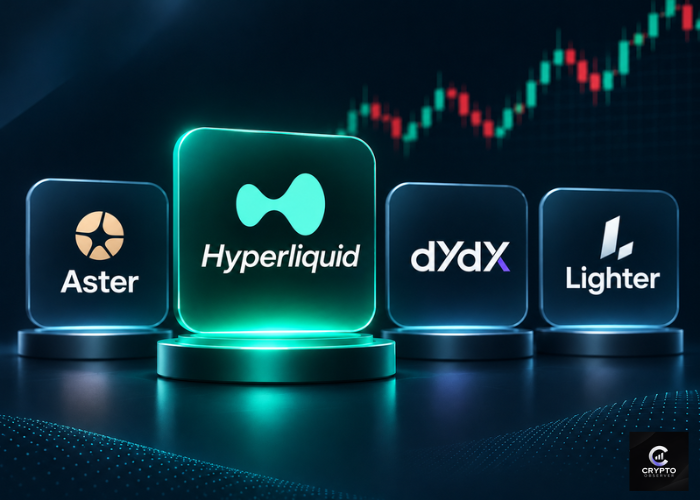
Hyperliquid is not the only decentralized exchange competing for derivatives traders.
Platforms such as Aster, dYdX and Lighter are also active in the derivatives trading sector.
Their approaches to liquidity, trading infrastructure, token incentives and ecosystem development differ.
| Platform | Primary Focus | Investment Consideration |
|---|---|---|
| Hyperliquid | Onchain order-book trading and multi-asset markets | Revenue generation and HYPE tokenomics |
| Aster | Decentralized spot and perpetual trading | Competition and ecosystem growth |
| dYdX | Decentralized derivatives infrastructure | Trading demand and protocol adoption |
| Lighter | Onchain perpetual futures trading | Liquidity and market expansion |
The comparison highlights why investors should evaluate each platform beyond its trading volume or token price.
Hyperliquid’s financial performance and expansion into non-crypto markets give it a distinct position. However, maintaining that position will require continued innovation, liquidity and user retention.
A competitor that offers better execution, lower fees or more attractive trading products could challenge its market share.
Is Hyperliquid a Good Investment in 2027?
Whether Hyperliquid is a good investment in 2027 depends on how successfully the protocol converts its existing market activity into sustainable economic growth.
There are several reasons investors may continue monitoring HYPE.
The protocol has demonstrated substantial trading activity, generated significant fees and expanded into additional financial markets. Its Assistance Fund also creates a direct connection between eligible protocol fees and open-market HYPE purchases.
These characteristics provide a fundamental basis for evaluating the token beyond speculative price movements.
However, the investment case is not without weaknesses.
Future contributor distributions, competition, changing derivatives demand and regulatory uncertainty could affect its growth. Furthermore, strong protocol revenue does not necessarily mean HYPE is attractively valued at every market price.
Bullish and Bearish Scenarios for HYPE in 2027
| Scenario | Potential Developments |
|---|---|
| Bullish | Higher trading activity, stronger recurring revenue, successful HIP-3 and HIP-4 adoption, and sustained token demand |
| Neutral | Stable trading volume, moderate ecosystem growth and continued competition |
| Bearish | Lower trading activity, increased selling pressure, regulatory restrictions and declining market share |
These are conditional scenarios, not price predictions.
What Should Investors Monitor Before Buying HYPE?
Investors evaluating HYPE for 2027 should monitor a few measurable indicators rather than relying entirely on market sentiment.
- Protocol revenue: Whether fee generation remains sustainable across different market conditions.
- Trading volume: Whether Hyperliquid continues attracting active traders.
- Open interest: Whether outstanding derivatives positions indicate sustained market participation.
- Circulating supply: How token distributions and Assistance Fund purchases affect available supply.
- Ecosystem adoption: Whether HIP-3, HIP-4 and HyperEVM attract recurring users.
- Market valuation: Whether HYPE’s market capitalisation is reasonable relative to protocol activity and comparable projects.
Monitoring these indicators can help investors distinguish sustainable ecosystem growth from temporary trading activity.
Is HYPE Worth Considering for Long-Term Investment?
Hyperliquid has established itself as a significant participant in decentralized derivatives trading, supported by substantial trading volume, fee generation and expanding financial products.
Its Assistance Fund mechanism gives HYPE a distinctive token-economic feature, while developments such as HIP-3 and HIP-4 create opportunities to expand into additional financial markets.
However, the long-term investment case depends on more than protocol growth. Token valuation, future distributions, market competition and regulatory developments will all influence potential returns.
For investors considering HYPE in 2027, a balanced approach is more useful than assuming that increasing trading volume will automatically result in higher token prices.
Overall, Hyperliquid is a project worth monitoring for its revenue-generating infrastructure and expanding DeFi ecosystem. Whether HYPE represents an attractive investment in 2027 will depend on its valuation, continued adoption and ability to maintain sustainable demand relative to its available supply.
This is a research-based assessment, not a personalised investment recommendation.