


































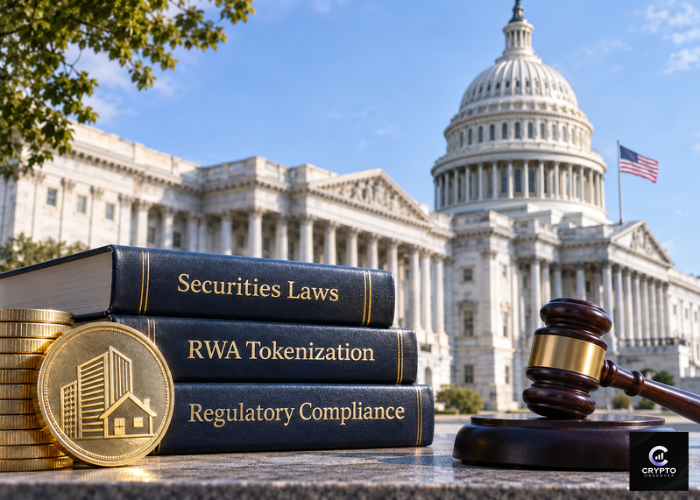
The United States is one of the most important markets for real-world asset (RWA) tokenization. Its capital markets, institutional investment infrastructure and established securities regulations provide significant opportunities for businesses seeking to bring traditional financial assets onto blockchain networks.
However, tokenizing an asset does not remove the legal obligations associated with its ownership, distribution or transfer.
A token representing equity in a real estate investment vehicle may constitute a security. A token representing an interest in a private credit portfolio may fall under investment company regulations. A platform facilitating secondary trading may trigger broker-dealer or alternative trading system requirements.
For businesses developing RWA tokenization platforms, understanding these distinctions is essential.
The United States does not have one comprehensive regulatory framework specifically governing every category of tokenized real-world assets. Instead, applicable requirements depend on the underlying asset, legal structure, rights attached to the token, transaction characteristics and activities performed by the platform.
This research examines the principal federal regulatory frameworks, securities exemptions, registration requirements, compliance obligations and operational considerations that businesses must evaluate before launching an RWA tokenization platform in the United States.
Understanding the Legal Nature of Tokenized Assets
The first step in designing a compliant RWA tokenization structure is determining what the token legally represents.
Blockchain technology provides a mechanism for issuing, recording and transferring digital tokens. However, it does not independently determine the legal classification of the underlying investment or establish ownership rights. This distinction is central to understanding who actually owns tokenized real-world assets when traditional financial assets move on-chain.
Consider three examples.
A company tokenizes ownership interests in a commercial property investment vehicle. Investors receive tokens representing economic interests in the entity.
A financial institution tokenizes a portfolio of private credit loans. Investors receive digital representations of interests in the investment structure.
A commodity company issues tokens representing claims to allocated physical gold held in custody.
Although all three arrangements involve tokenization, their legal treatment can differ considerably.
The first two structures may involve securities under US federal law. The third may involve contractual property rights, commodity-related regulation or securities considerations depending on its actual structure.
The legal analysis must therefore begin with the rights attached to the token rather than its technical design.
The Howey Test and Investment Contracts
One of the most important legal considerations in US tokenization is the Supreme Court’s decision in SEC v. W.J. Howey Co. (1946).
The Howey Test is used to determine whether an arrangement constitutes an investment contract under US securities law.
The traditional analysis considers whether there is:
- An investment of money.
- In a common enterprise.
- With a reasonable expectation of profits.
- To be derived from the entrepreneurial or managerial efforts of others.
A tokenized investment may satisfy these elements even when the token itself is technically a digital asset.
For example, consider a platform issuing tokens representing fractional interests in a commercial property.
Investors contribute capital, while a professional management company acquires the property, manages tenants, collects rent and distributes returns.
The economic arrangement may satisfy the characteristics of an investment contract.
The fact that investors hold digital tokens instead of conventional investment certificates does not automatically change the securities analysis.
This principle is fundamental to RWA compliance.
The regulatory treatment follows the economic substance and legal rights of the arrangement, not the terminology used to describe the token.
The SEC and Securities Regulation
The US Securities and Exchange Commission (SEC) plays a central role in regulating securities offerings, intermediaries and investment markets.
For RWA tokenization businesses, securities compliance generally begins with determining whether the proposed token constitutes a security.
If it does, the issuer must identify an applicable registration pathway or exemption before offering it to investors.
The Securities Act of 1933 establishes the registration requirements for securities offerings unless an exemption applies.
The Securities Exchange Act of 1934 establishes additional requirements concerning securities transactions, intermediaries and secondary markets.
These two statutes are particularly important for businesses developing tokenized investment products.
Regulation D: Private Securities Offerings
Regulation D provides exemptions that allow eligible issuers to raise capital without conducting a fully registered public securities offering.
Two provisions are particularly relevant.
Rule 506(b) allows issuers to raise an unlimited amount of capital from accredited investors and a limited number of sophisticated non-accredited investors, subject to applicable conditions.
General solicitation and advertising are generally prohibited.
Rule 506(c) permits general solicitation, provided all purchasers are accredited investors and the issuer takes reasonable steps to verify their accredited investor status.
For RWA platforms, these exemptions can provide a pathway for tokenized real estate, private credit and other private investment products.
However, using a blockchain does not remove the underlying offering requirements.
Issuers must still consider disclosure obligations, investor verification, resale restrictions and applicable state securities notice filings.
A Form D filing is generally required after the first sale under Regulation D, subject to the applicable filing requirements.
Regulation S: Offshore Securities Offerings
Regulation S provides a safe harbor for certain securities offerings and sales occurring outside the United States.
It is particularly relevant to RWA businesses seeking international investors.
However, Regulation S is not a blanket exemption from US securities laws for any token marketed internationally.
The issuer must satisfy applicable offshore transaction requirements and restrictions on directed selling efforts in the United States.
Additional distribution compliance conditions may apply depending on the securities involved.
Tokenized securities also introduce practical challenges because blockchain transfers can occur continuously across borders.
A platform must implement appropriate transfer restrictions to prevent transactions that violate applicable offering conditions.
This is especially important when the same token infrastructure supports both domestic and international investor accounts.
Investment Company Act: A Critical Consideration for RWA Platforms
One of the most frequently overlooked regulatory considerations in RWA tokenization is the Investment Company Act of 1940.
A tokenized investment vehicle may fall within the definition of an investment company depending on its activities, assets and structure.
This is particularly relevant to private credit funds, diversified real estate portfolios and investment vehicles holding securities.
Two exemptions frequently considered in private fund structures are Section 3(c)(1) and Section 3(c)(7).
| Provision | General framework |
|---|---|
| Section 3(c)(1) | Generally limits beneficial ownership to 100 persons, subject to statutory exceptions and applicable counting rules. |
| Section 3(c)(7) | Generally requires beneficial owners to be qualified purchasers, subject to applicable conditions. |
These exemptions are commonly used by private investment funds.
However, tokenization introduces an additional operational challenge.
Traditional investment structures generally maintain investor registers through established administrative systems.
A tokenized structure may allow interests to be transferred through blockchain transactions.
The issuer must ensure that transfers do not result in violations of investor eligibility requirements or applicable ownership limits.
For example, a fund relying on Section 3(c)(7) cannot simply allow unrestricted transfers to wallets without considering whether the beneficial owners qualify as qualified purchasers.
Smart contracts can assist with transfer restrictions, but they do not independently establish legal compliance.
Broker-Dealer and Trading Platform Requirements
An RWA platform may perform activities that trigger additional securities regulatory requirements.
This depends on how the business operates.
A company that merely provides software for an issuer may have a different regulatory position from a company that solicits investors, receives transaction-based compensation, facilitates securities transactions or operates a secondary trading venue.
Broker-Dealer Registration
Under the Securities Exchange Act of 1934, businesses engaging in activities that meet the definition of a broker or dealer may need to register with the SEC and become members of FINRA, where applicable.
Activities requiring careful examination include:
- Soliciting investors to purchase tokenized securities.
- Arranging securities transactions.
- Receiving transaction-based compensation.
- Participating in the execution of securities trades.
- Operating as an intermediary between buyers and sellers.
A tokenization platform should not assume that describing itself as a technology provider removes potential broker-dealer obligations.
The actual functions performed by the business determine the regulatory analysis.
Alternative Trading Systems
An alternative trading system (ATS) is a trading system that brings together buyers and sellers of securities through established mechanisms but operates under a different regulatory framework from a national securities exchange.
An ATS generally operates as a registered broker-dealer and complies with Regulation ATS.
A platform facilitating secondary trading of tokenized securities must evaluate whether its activities constitute operating an exchange or an ATS. This question is increasingly relevant as established exchanges explore blockchain-based trading infrastructure, including the NYSE’s planned tokenized stock trading platform powered by Avalanche.
The legal analysis depends on the trading functionality, matching mechanisms, order handling and other operational characteristics.
A platform cannot avoid these requirements simply by executing transactions through smart contracts.
FinCEN, AML and KYC Requirements
Securities compliance is only one part of the US regulatory framework.
Businesses involved in transmitting or exchanging convertible virtual currency may also fall within the scope of the Bank Secrecy Act and FinCEN regulations.
FinCEN’s 2019 guidance on convertible virtual currency explains how existing money transmission rules apply to certain business models involving digital assets.
Depending on the activities performed, an RWA platform may qualify as a money services business or money transmitter.
Relevant activities can include accepting and transmitting value, exchanging virtual currency and facilitating transfers between customers.
Not every tokenization platform automatically qualifies as a money transmitter. The analysis depends on the business model, transaction flow and applicable regulatory definitions.
Where money transmission obligations apply, businesses may need to consider:
- FinCEN registration.
- A written anti-money laundering programme.
- Customer identification and verification.
- Suspicious activity reporting.
- Recordkeeping.
- Applicable sanctions screening.
- State money transmission licensing.
The precise requirements depend on the entity’s activities and regulatory status.
OFAC Sanctions Compliance
The Office of Foreign Assets Control administers and enforces US economic sanctions programmes.
Businesses operating digital asset platforms must consider whether customers, counterparties or transactions involve sanctioned persons, entities or jurisdictions.
Blockchain-based transactions introduce particular monitoring challenges because digital assets can move between addresses without relying on conventional bank account infrastructure.
A compliant platform should consider wallet screening, sanctions controls, transaction monitoring and procedures for handling potentially prohibited transactions.
Importantly, blockchain analytics alone does not replace a comprehensive sanctions compliance programme.
State-Level Regulation and Money Transmission
US financial regulation is not exclusively federal.
Money transmission activities can trigger licensing obligations across individual states.
For an RWA platform transferring digital assets or customer funds, state licensing analysis is therefore important.
The New York Department of Financial Services, for example, operates a specialised regulatory framework for virtual currency businesses under its BitLicense regime.
New York also has separate money transmission requirements.
Other states maintain their own licensing frameworks, with differences in definitions, exemptions and application requirements.
A company operating nationally must determine which states’ requirements apply to its specific activities.
A federal registration or securities exemption does not automatically satisfy state-level money transmission obligations.
This distinction is especially important for businesses intending to operate a nationwide tokenization marketplace.
Designing a Compliant RWA Tokenization Platform
Regulatory compliance should be considered during platform architecture and legal structuring, rather than added after product development.
A robust US-focused RWA platform should address several interconnected requirements.
1. Legal asset structuring
2. Securities classification
3. Investor eligibility
4. KYC and AML controls
5. Transfer restrictions
6. Custody and asset administration
7. Disclosure and reporting
8. Secondary market controls
Any proposed trading functionality should undergo a separate regulatory assessment before launch.
These requirements demonstrate why RWA tokenization is not simply a blockchain development project.
It involves the coordination of securities law, financial regulation, asset administration, investor protection and technical infrastructure.
Conclusion: Compliance Will Determine the Institutional Future of RWA Tokenization
The United States offers substantial opportunities for businesses developing tokenized real-world asset platforms.
However, its regulatory framework requires careful consideration of the legal and economic characteristics of each tokenized investment.
A real estate token may represent security. A private credit token may involve investment company regulations. A platform facilitating secondary trading may trigger broker-dealer or exchange-related requirements.
AML, sanctions compliance, custody arrangements and state-level licensing introduce additional considerations.
There is no universal regulatory exemption that makes every RWA tokenization project compliant.
The most effective approach is to establish the legal structure before developing the token, identify the relevant regulatory obligations and incorporate those requirements into the platform’s operational architecture.
The long-term institutional success of RWA tokenization in the United States will depend not simply on the ability to represent assets on blockchain networks, but on the ability to preserve enforceable ownership rights, investor protections and regulatory accountability throughout the asset’s lifecycle.